 Home
Home
 About Us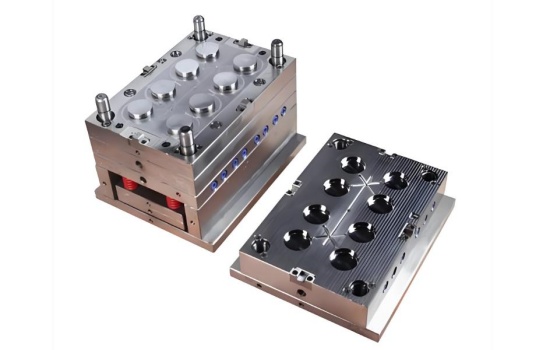
How to choose the appropriate mold for TPE material?
Molds are various templates and specialized tools used in industrial production for injection molding, injection molding, and other methods to obtain the desired goods. Simply put, a mold is a specialized tool used to shape objects, which is composed of various parts. Different molds are made up of different parts. It is crucial to complete the production and processing of object appearance design based on changes in the scientific situation of the formed materials. She holds the title of 'Mother of Industrial Production'.
1. Rubber coated secondary injection mold
The encapsulation secondary mold is made of two different plastic materials that may not be injection molded on the same plastic machine, and is formed in two stages; After the product is extracted from one set of molds and removed, it is then placed in another set of molds for a second injection molding process. Generally, this type of rubber product processing technology is carried out by two molds instead of a professional two-color injection molding machine.
2. Two color mold
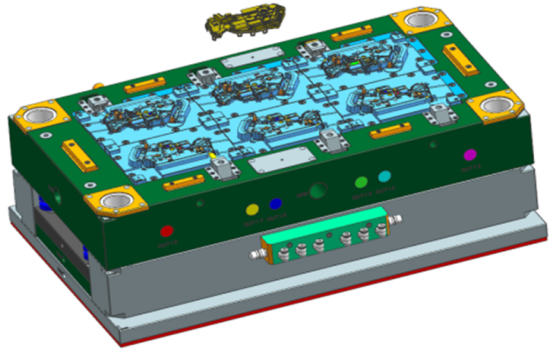
Two color molds are injection molded from two different plastic materials on the same plastic machine, forming them in two stages. There are 2 material barrels, 2 nozzles, and the mold is divided into 2 water inlet parts. However, the product only needs to be molded once, usually using a set of molds and requiring a professional two-color injection molding machine.
The production and processing of raw materials for encapsulation secondary injection molds are very similar to those for two-color molds. Whether it is a two-color mold or a rubber coated secondary injection mold, a composite injection molding process of hard and soft plastics is generally used, and 99% of the time, a part of the hard rubber of the injection molded part is injected first, followed by a part of the soft rubber of the injection molded part, as the soft rubber is prone to deformation.
Advantages and disadvantages of encapsulation secondary injection molds and two-color molds
1. Rubber covered mold
(1) Advantages: It can be produced and processed using general plastic machines, with relatively low investment in machinery and equipment;
2) Defects: Inappropriate for injection molding of fine dual raw material and multi raw material injection molded parts; The molding production and processing cycle time is relatively long, and the productivity is lower than that of two-color molds.
2. Two color mold
(1) Advantages: - Fast molding production and processing, the appearance of the products produced and processed is more beautiful and elegant, and it can produce and process fine two-color or even multi-color (multi-color or multi raw material injection molding processing requires the addition of relative material barrels and extruder screw melting equipment) products; For products with high difficulty in bonding, such as the bonding of hard rubber PA and soft rubber TPE, dual color molds are used for injection molding processing. Compared to the production and processing of rubber molds, the bonding effect of hard and soft plastics is actually better;
(2) Defect: Two color molds require professional two-color injection molding machines, but the engineering cost of two-color injection molding machines is much higher than that of general plastic machines.
Previous:Is plastic shrinkage important for the internal structure of molds?
Next:What is the difference between plastic mold injection molding and metal mold stamping?